Laurel types

Cherry laurel

Prunus laurocerasus

The classic laurel hedge. It grows fast, has big glossy leaves and puts up with almost any garden.

Also known as common laurel, English laurel and Versailles laurel.

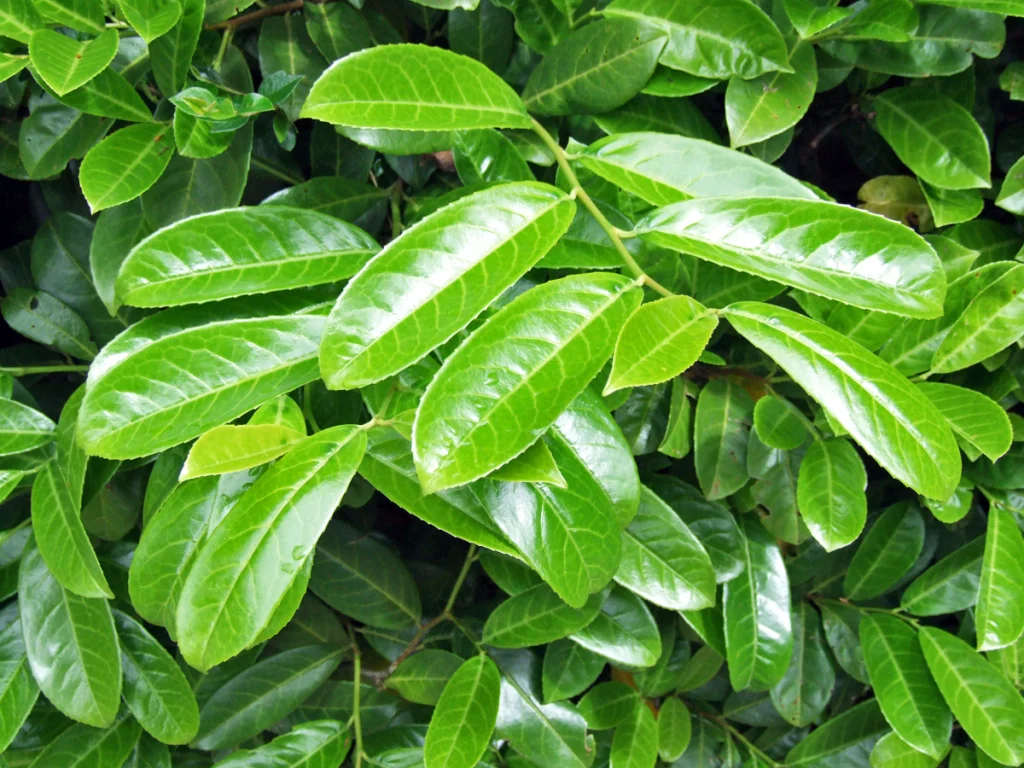
Cherry laurel hedge with large glossy leaves

Cherry laurel at a glance

Growth rate
Very fast: 20 to 60cm a year
Sunlight
Full sun to partial shade
Soil
Moist, well-drained, fertile
Aspect
Any; sheltered or exposed
Hedge height
1.5 to 4 metres and above
Planting distance
60 to 90cm apart

About cherry laurel

Cherry laurel is a very dense evergreen shrub, or a small to medium tree if you leave it alone, with large, glossy green leaves. In spring it carries upright spikes of small white flowers, followed by shiny red cherries that ripen to black. Don’t eat them.

Despite the name, it isn’t a true laurel. It belongs to the cherry family, Prunus, and gets its common name from its likeness to bay laurel. Both get used for laurel wreaths.

It comes from the regions around the Black Sea, in south-west Asia and south-east Europe, and the Victorians planted it everywhere. For a big hedge it’s still hard to beat. It looks best on a large scale, along a long drive or a field boundary.

Growing cherry laurel

Cherry laurel grows in full sun or partial shade, and it copes with deeper shade better than most hedging plants. It likes moist, well-drained, fertile soil and sulks in waterlogged ground or on very thin chalk. Any aspect suits it, sheltered or exposed.

It’s easy to grow. Keep new plants watered and fed through their first season and they settle in quickly. After that, expect 20 to 40cm of growth a year, or up to 60cm in a good spot, which is why it’s the cheap way to a quick evergreen screen.

Cherry laurel care

Pruning

Grown as a single shrub, cherry laurel makes a well-branched framework that needs little or no pruning. As a hedge, trim it to shape one to three times between late spring and late summer, on a dry day. Stop in September to cut the risk of bare patches over winter.

Secateurs or hand shears give the neatest finish because you cut stems rather than slicing through leaves. Leave any hard pruning until March, just before the big flush of growth in late April and May, so the plant recovers quickly. It’s very tough and will regrow even when cut right back.

The leaves are slow to rot on the compost heap but shred easily. Check for nesting birds before you cut. Our laurel hedge care guide goes into trimming in more detail.

Pests and diseases

Cherry laurel is generally tough, but watch for powdery mildew, leaf spot fungi and bacterial shothole, which leaves small round holes in the leaves. Vine weevil and leaf-mining moths can also damage the foliage. Feeding, watering in dry spells and clearing up fallen infected leaves keeps most problems in check.

Is cherry laurel poisonous?

Yes. The leaves and seeds are toxic if eaten, so keep clippings away from livestock and never cook with them. For cooking you need bay leaves from bay laurel.
Our picks

Where to buy cherry laurel

Pot-grown cherry laurel is sold all year. Rootballed and bare-root plants are cheaper, but you can only buy them from November to March. Amazon's prices move around daily, so we link to the listings instead of quoting them.

Best all-rounder

Pot-grown cherry laurel hedging

The classic large-leaved laurel hedge. Look for bushy plants of 60 to 100cm with several stems from the base.

Best for: Fast, dense screening on a budget

Check price on Amazon

Hedging favourite

Cherry laurel Rotundifolia

The most popular cherry laurel variety for hedging, with slightly rounder leaves and a naturally upright habit.

Best for: Formal hedges from 1.5 to 4 metres

Check price on Amazon

Instant screen

Large instant cherry laurel

Tall specimens of 150cm and above in large pots. Expensive per plant, but you get a usable screen immediately.

Best for: Privacy from day one

Check price on Amazon
See all our laurel hedging and tool picks

Cherry laurel questions

Trim back any shoots that stick out beyond the height and width you want straight after planting. Then trim the sides and top lightly twice a year. Each cut encourages the shoots inside the hedge to branch, which builds a dense screen from the base up.

Give laurel its routine trim between late spring and late summer, ideally in dry weather. Stop by September so new growth can harden before winter.

If a hedge needs cutting back hard, do it in early spring (around March), just before the main flush of growth, so it recovers quickly.

Always check for nesting birds first. Under the Wildlife and Countryside Act 1981 it is an offence to damage or destroy an active nest, and the main nesting season runs from March to August.

Yes, but with large-leaved cherry laurel a powered trimmer slices through leaves and the cut edges turn brown. It looks untidy for a few weeks until new growth covers it. For the neatest finish, especially on smaller hedges, use secateurs or hand shears and cut stems just above a leaf.

More laurel hedging questions answered

Compare other laurels

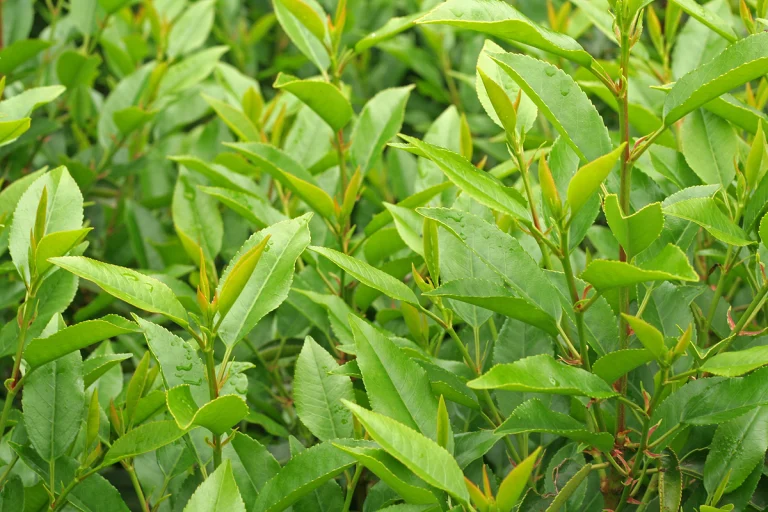
Portuguese laurel foliage with red stems

Portuguese laurel

Tougher than cherry laurel, with smaller glossy leaves on red stems. Pick it for cold, windy or chalky gardens.

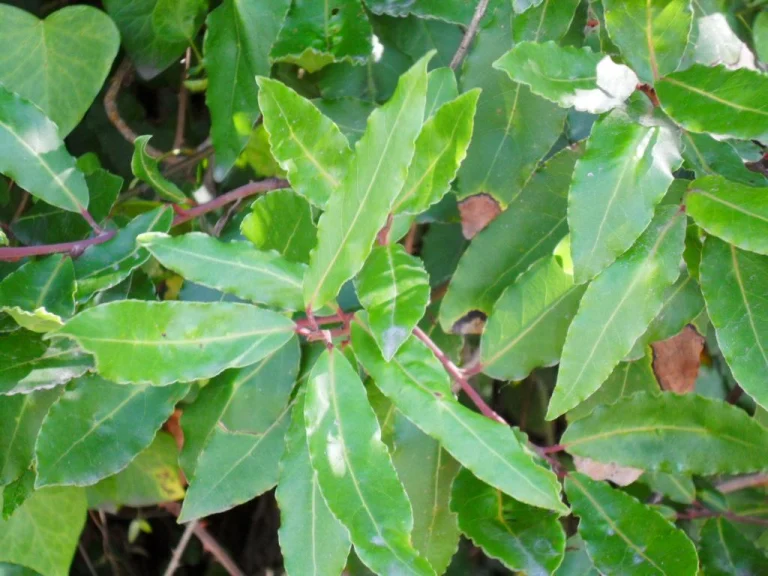
Bay laurel leaves

Bay laurel

The true laurel and the one you cook with. Usually grown as a clipped standard, it also makes a slow, neat hedge.