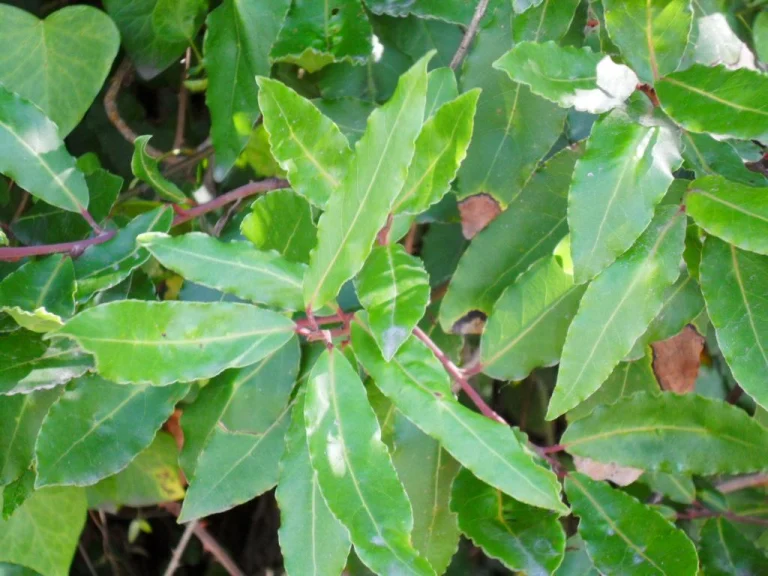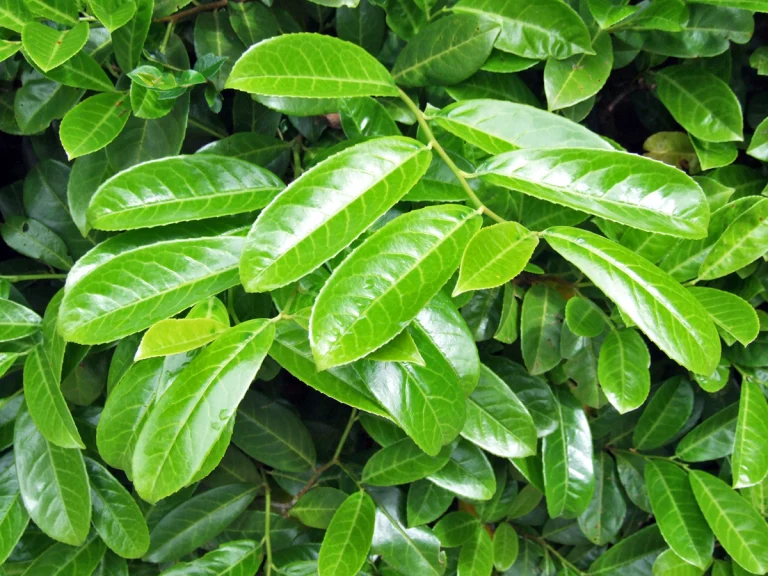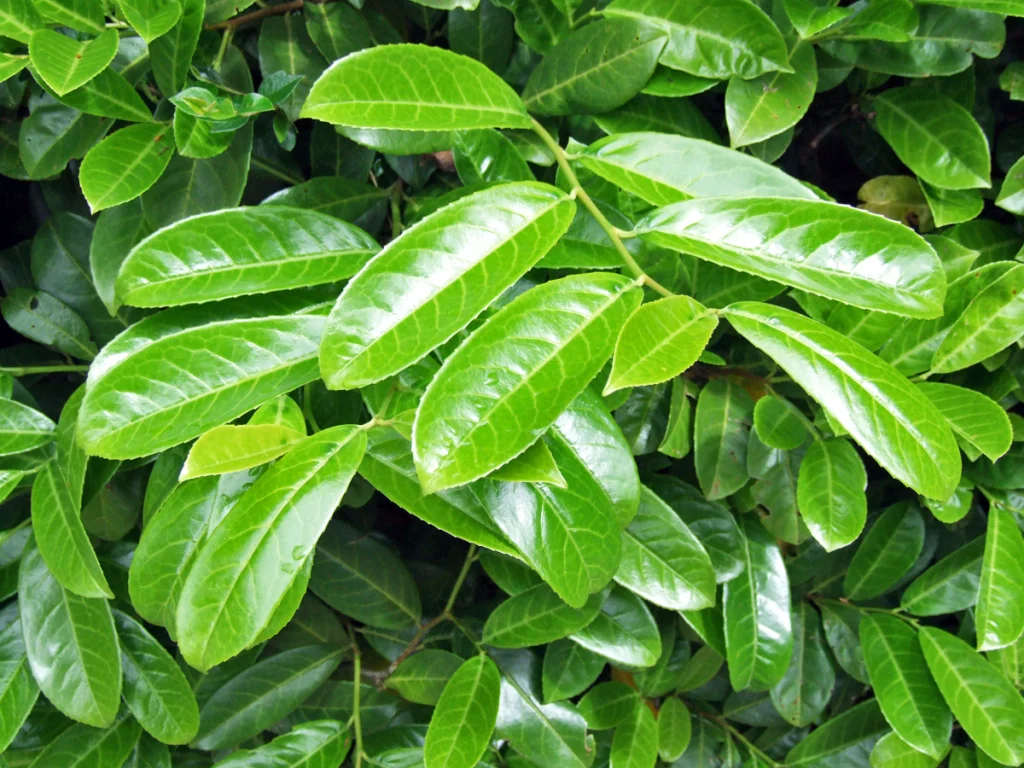
Most laurel hedging sold in Britain is simply labelled “laurel” or “common laurel”, and nine times out of ten it’s a variety called ‘Rotundifolia’. But there are several other cherry laurels, and a few of them are better suited to particular jobs: a narrow space, a low hedge, a cold garden or a smarter finish. Here’s how the main ones compare.
All of these are forms of cherry laurel, Prunus laurocerasus. Portuguese laurel is a separate species with its own guide.
| Variety | Leaves | Habit | Best for |
|---|---|---|---|
| Rotundifolia | Large, broad, mid-green | Bushy and vigorous | Most hedges, fast and cheap |
| Caucasica | Narrower, darker, pointed | Upright and vigorous | Tall hedges and colder gardens |
| Novita | Large, dark, glossy | Upright and very vigorous | Fast, tall screens |
| Etna | Very glossy, bronze when young | Compact | Medium hedges up to about 2m |
| Otto Luyken | Narrow and dark | Low and spreading | Low hedges and ground cover |
| Genolia | Small and dark | Narrow and columnar | Tight spaces |
Rotundifolia
The standard British hedging laurel. It has big, broad, rounded leaves in a fresh mid-green, and it grows fast, often 30cm or more a year once established. It branches well from the base if you trim it early on, and it makes a dense, bushy hedge from about 1.5 metres up to 4 metres or more.
It’s the cheapest laurel to buy, it’s sold in every size from bare-root whips to instant hedging, and it’s very tough. If you just want a reliable green screen, this is the one to buy, and it’s what most of our advice on this site assumes.
Caucasica
Caucasica has narrower, more pointed leaves in a darker green than Rotundifolia, and it grows more upright. Growers generally describe it as hardier, which makes it a good pick for colder or more exposed gardens. Because it grows upwards more than outwards, it’s well suited to taller hedges, and its darker leaves give a slightly smarter look.
Novita
Novita is a newer variety that nurseries sell as a faster, more upright alternative to Rotundifolia. It has large, dark, very glossy leaves and is quick to make height. It tends to cost a bit more than Rotundifolia. If speed and a tall, dense screen are what you’re after, it’s worth looking at, but Rotundifolia will do much the same job for less money in most gardens.
Etna
Etna is the one to choose if you like laurel but find Rotundifolia a bit too big and coarse. It’s more compact, with very shiny, dark leaves, and the new shoots come through a bronze-copper colour in spring, which looks lovely against the older foliage. It’s slower than Rotundifolia and makes a neat hedge up to about 2 metres.
Otto Luyken
A low, spreading laurel with narrow, dark green leaves that point upwards. It usually grows to around a metre tall and wider than it is high, and it flowers heavily in spring with upright spikes of white flowers. It’s very useful for low hedges, edging, and covering ground in shade under trees, where little else will grow. Don’t buy it hoping for a privacy screen.
Genolia
Genolia is bred to grow tall and narrow, with small, dark leaves on a tight, upright frame. It’s the answer for a slim hedge along a drive, a path or a side return where Rotundifolia would take over. It’s slower and more expensive than common laurel, but it saves a lot of trimming in a tight space.
Which variety should you choose?
- For a standard garden hedge, quick and cheap, choose Rotundifolia.
- For a tall hedge in a cold or windy garden, choose Caucasica.
- For a smaller, smarter hedge with spring colour, choose Etna.
- For a low hedge or shady ground cover, choose Otto Luyken.
- For a narrow space, choose Genolia.
- If you’re on chalk, or want a formal clipped look, look at Portuguese laurel instead.
Do varieties mix?
You can mix them, but it rarely looks right in a single row. They grow at different speeds and have different leaf shapes, so a mixed hedge looks patchy. It’s better to pick one for the hedge and use something like Otto Luyken as a low planting in front of it.
Buying tips
Check the label carefully when you buy. Plants sold as “laurel hedging” without a variety name are almost always Rotundifolia, which is fine, but if you’re paying more for a named variety you want to be sure you’re getting it. Look for bushy plants with several stems from the base rather than a single tall shoot, and check the leaves for spots before you accept a delivery.
Use our hedge calculator to work out how many plants you need, then see our laurel picks.