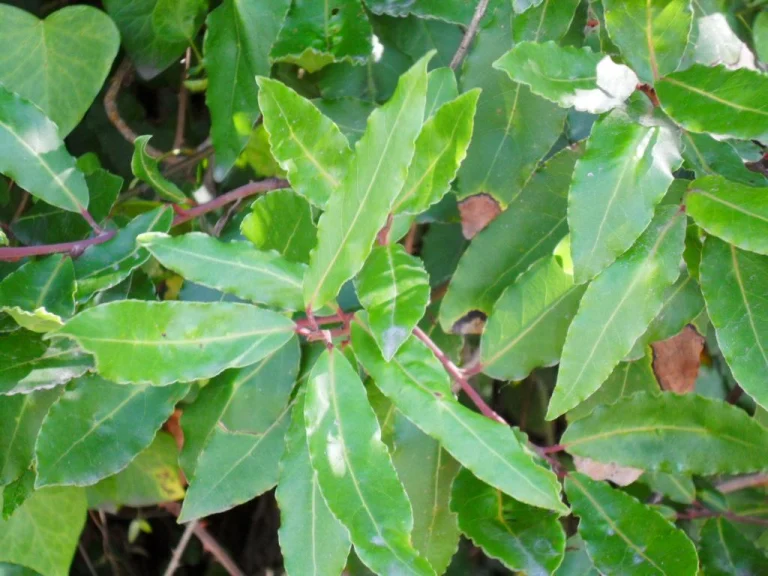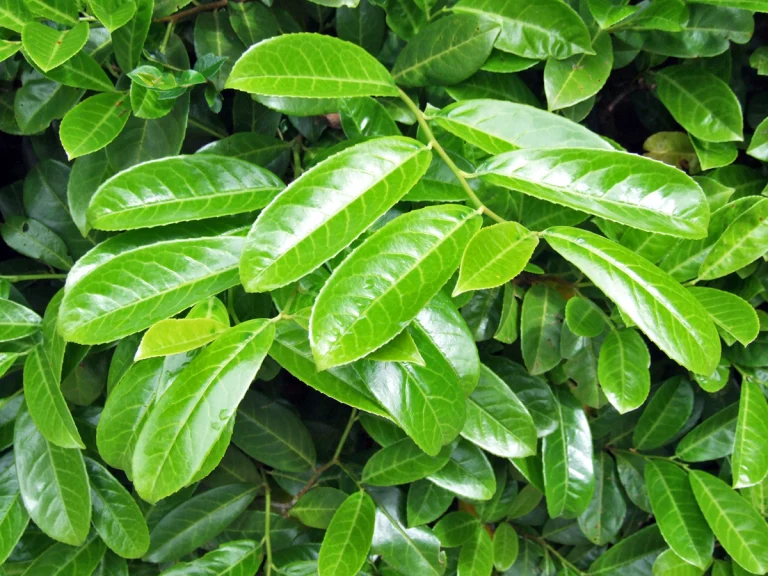
Laurel and bay both have big leaves, and that changes how you should cut them. A hedge trimmer slices straight through the leaves, and the cut edges turn brown. Hand tools let you cut the stems instead, just above a leaf, so the hedge or topiary looks finished the moment you step back. On a small hedge, a bay standard or a pair of lollipop laurels by the front door, hand tools are the better choice.
These are the tools we’d buy, and what each one is for.
Which tool for which job
| Job | Tool |
|---|---|
| Trimming a small laurel hedge neatly | Bypass secateurs |
| Shaping a bay standard, ball or cone | Topiary shears |
| Trimming a medium hedge of Portuguese laurel | Hedge shears |
| Cutting back thick, old stems | Pruning saw, plus loppers |
Best secateurs: Felco 2
There’s a reason you see Felco 2s on the belts of professional gardeners. They’re bypass secateurs, which means the blades slide past each other like scissors and cut cleanly rather than crushing the stem. They’ll cut stems up to 25mm thick, and the forged aluminium handles are light and tough. Every part can be replaced, from the blade to the spring, so a pair can last decades.
For laurel and bay, they’re ideal. Cut each stem just above a leaf and you avoid the brown, sliced edges a trimmer leaves. Felco also make smaller and left-handed models if the Felco 2 doesn’t suit your hand.
Best for sharpness: Okatsune 103
Japanese bypass secateurs that many gardeners swear by. The 103 is the medium size, about 20cm long, and it cuts up to 25mm. The blades are very sharp and the action is simple and light. The blade steel needs a wipe and a drop of oil after use to stop it rusting, but if you’re happy to look after them, they’re a pleasure to use.
They’re a good choice if you find Felcos a bit heavy, or if you prefer a simpler tool with fewer moving parts.
Best for topiary: Burgon & Ball topiary shears
Single-handed shears made in Sheffield, and endorsed by the RHS. You squeeze the handles in one hand, which leaves your other hand free to hold back foliage or steady the plant while you shape it. They come in two sizes: the small pair has 9.5cm blades for fine work, and the large pair has 14.5cm blades for bigger shapes.
For bay standards, balls and cones, and for keeping small Portuguese laurel topiary crisp, these are the tool we’d reach for. They carry a ten-year guarantee.
Best hedge shears: Fiskars PowerGear X HSX92
Ordinary two-handed hedge shears can be hard work on laurel’s woody stems. These use a geared mechanism that Fiskars says gives up to three times the cutting power of a standard design. They’re about 63cm long and weigh around 820g, and the blades have a non-stick coating that helps with sappy growth.
They’re a good fit for a short or medium hedge, especially Portuguese laurel, where you want a neat, even surface without the noise of a powered trimmer. On big-leaved cherry laurel, secateurs still give the cleanest finish.
Best saw: Silky Pocketboy 170
When you’re cutting back an overgrown laurel, you’ll meet stems far too thick for secateurs or loppers. A Japanese pull saw makes short work of them. The Silky Pocketboy has a 170mm folding blade, weighs about 200g, and cuts on the pull stroke, which is easier to control in a tangle of branches. It folds away safely into a pocket or a belt pouch.
Our guide to cutting back an overgrown laurel hedge explains how to use it.
Looking after your tools
Laurel and bay sap is sticky, and it builds up on blades quickly. Wipe your tools down after every use, clean off sap with a little white spirit or a resin cleaner, and oil the blades and pivot. Keep them sharp with a small whetstone or diamond file, following the original bevel. Sharp blades cut cleanly and heal faster, and they also help stop leaf infections like shothole getting into the cuts.
If you’re trimming more than one hedge, give the blades a wipe with disinfectant in between.
And for big hedges?
For a long or tall laurel hedge, a powered trimmer saves a lot of time. See our guide to the best hedge trimmers for laurel, and use hand tools to tidy the side people see.