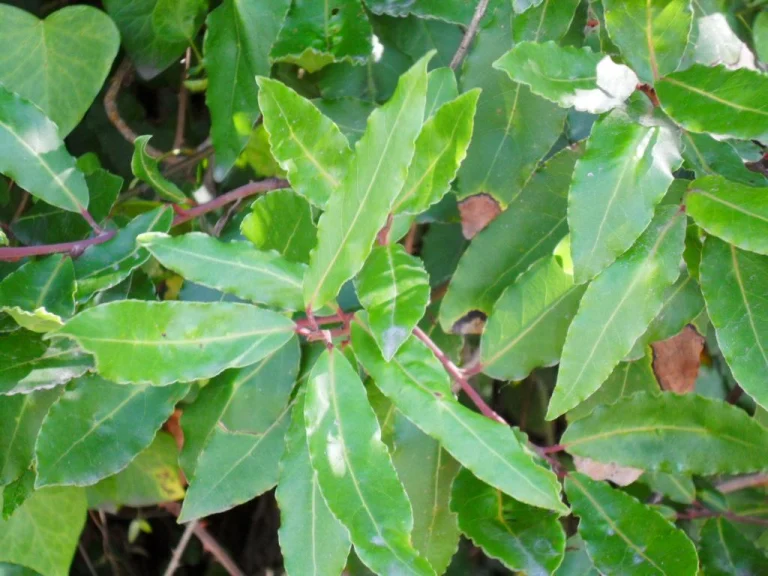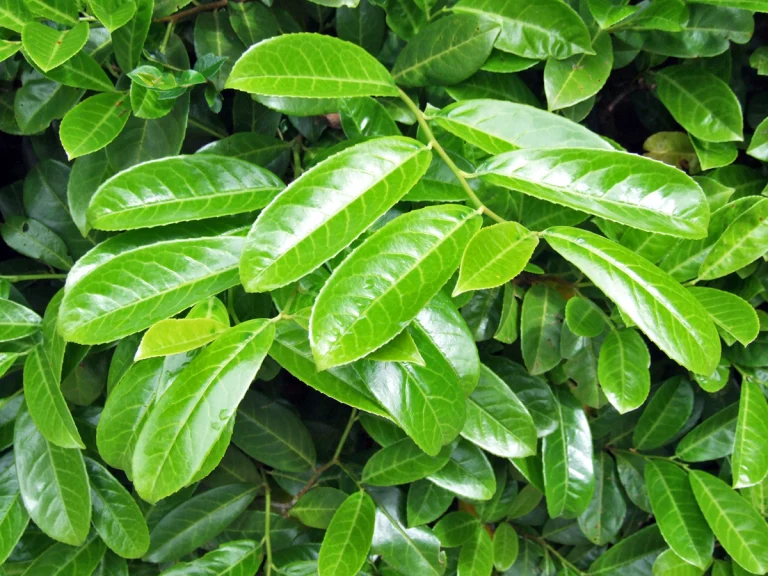
Spotted laurel is the shrub with glossy green leaves splashed with gold that you’ll find in the darkest corners of Victorian gardens, under trees and against north walls. It has a slightly old-fashioned reputation, but it’s earned its place. It grows in dry shade, which is one of the hardest spots in any garden, and it shrugs off town pollution, neglect and poor soil.
What spotted laurel is
Despite the name, spotted laurel, Aucuba japonica, isn’t related to cherry laurel, Portuguese laurel or bay. It comes from Japan and was named for its big, glossy, laurel-like leaves. It’s also called Japanese laurel, and the most heavily spotted forms are sometimes sold as “gold dust plant”.
It’s an evergreen shrub that usually grows to 1.5 to 3 metres, slowly at first and steadily once settled. The leaves are leathery and toothed towards the tip. Most garden forms are spotted or splashed with yellow, but there are plain green ones too.
Where it grows best
Spotted laurel’s great strength is shade. It’s happy in deep shade, including the dry shade under large trees, and it grows on almost any soil that isn’t waterlogged. That makes it one of the best shrubs for filling gaps where cherry laurel has thinned out under trees or along a shady boundary. Our guide to fixing a laurel hedge that’s bare at the bottom suggests it for exactly that.
It doesn’t like strong sun. In a hot, sunny spot the leaves can scorch and turn black or yellow. Hard frost and cold, drying winds can blacken the leaves too, and so can waterlogged soil. In a sheltered, shady corner, it rarely has problems.
Using spotted laurel as a hedge
It makes a good informal hedge, especially in shade. It’s slower than cherry laurel, so it’s best for low to medium hedges of around 1 to 2 metres rather than tall screens. Plant at about 60 to 90cm apart and water well through the first summer.
Because the leaves are big, it looks best trimmed with secateurs rather than a hedge trimmer, which slices the leaves in half. One trim a year in spring is usually enough. A spotted laurel hedge won’t give you the crisp lines of yew or privet, but it gives you a bright, evergreen screen where those hedges would struggle.
Pruning
Prune spotted laurel in spring, in March or April. Cut stems back to just above a leaf or bud. It’s very forgiving and can be cut back hard if it gets too big. Old, leggy plants can be cut down to 30 to 60cm and will regrow, though it’ll take a couple of years to fill out again.
If a variegated plant puts out a shoot of plain green leaves, cut it out at its base. Green shoots grow faster and can take over.
Berries: males and females
Spotted laurel plants are either male or female. Only female plants carry the bright red berries in autumn and winter, and they only do so if there’s a male plant nearby to pollinate them. Check labels if berries matter to you, and plant a male among a group of females. Some varieties, such as ‘Rozannie’, carry both kinds of flower and will berry on their own.
Is spotted laurel safe?
The berries are ornamental and not for eating. Treat spotted laurel the way you would any of the laurels: teach children not to eat the berries, stop dogs chewing the leaves, and don’t put the clippings where horses or livestock graze.
Spotted laurel or cherry laurel?
| Spotted laurel | Cherry laurel | |
|---|---|---|
| Growth | Slow to moderate | Fast |
| Typical height | 1.5 to 3m | 1.5 to 4m and above as a hedge |
| Deep or dry shade | Excellent | Copes, but can thin out |
| Full sun | Can scorch | Fine |
| Leaves | Often gold-spotted | Plain glossy green |
| Best use | Shady corners, gaps, low hedges | Fast privacy screens |
For a tall, fast screen, cherry laurel wins easily. For a dark, dry corner under trees where nothing seems to grow, spotted laurel is the better plant. They work well together: a cherry laurel hedge along the boundary, with spotted laurel filling the shady stretch under the big tree at the end.
Varieties to look for
‘Crotonifolia’ has heavily speckled leaves and is one of the most widely sold. ‘Picturata’ has a bold yellow centre to each leaf. ‘Rozannie’ is compact, plain green and berries on its own. Plain-leaved forms look calmer and suit modern planting schemes, while the spotted ones brighten up a gloomy corner.
To compare the other laurels, see our guides to cherry laurel, Portuguese laurel and bay laurel.