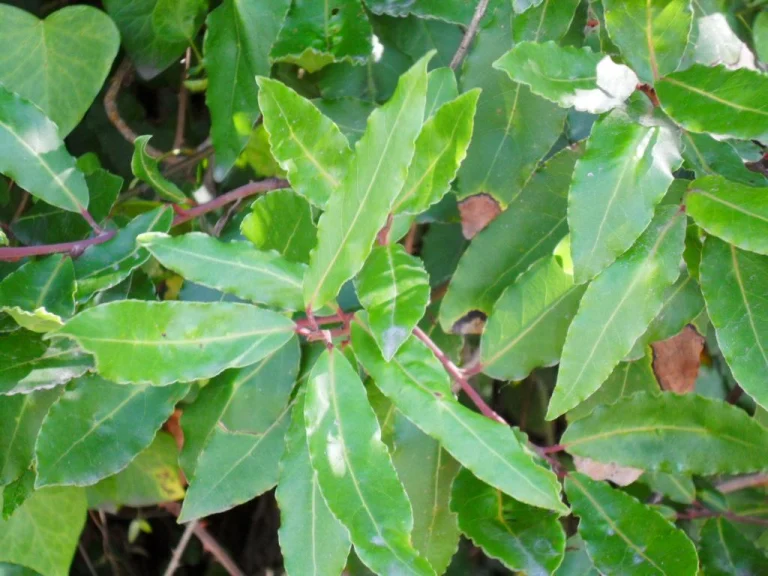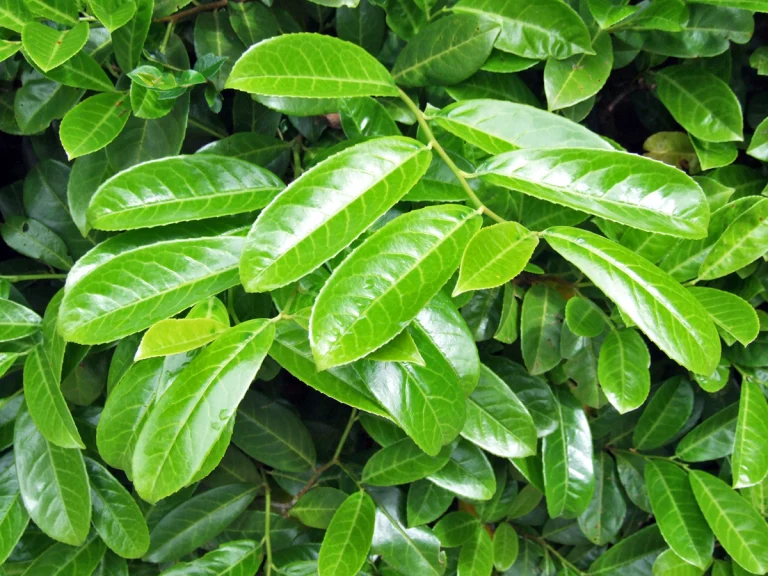
A laurel hedge that’s thick and green at head height but bare and twiggy at the bottom is very common. From the road you can see straight through it at knee level, and the dog can get out. Luckily, laurel is one of the easiest hedges to fix, because it grows new shoots from old, bare wood.
Why laurel goes bare at the base
The hedge is wider at the top
Nine times out of ten, this is why. If the top of the hedge is as wide as the bottom, or wider, it shades out the lower branches. Leaves that don’t get light are dropped, and once a branch is bare it stays bare. A lot of hedges end up like this simply because it’s easier to trim the top flat than to keep the sides sloping.
It was never cut back when young
Young laurel planted and left to shoot straight up will race for height and leave the base thin. Plants need trimming back in their first couple of years so they branch low down. Our planting guide covers this.
It’s competing for water and light
Laurel planted right up against a fence or wall, under trees, or in a strip of lawn often struggles at the base. The roots are dry, the back of the hedge is in shade, and the grass takes what water there is.
It’s just old
Leave a laurel hedge to its own devices for twenty years and it turns into a row of small trees: a line of trunks with a green canopy on top.
Fix the shape first
Whatever else you do, start trimming the hedge so the sides lean in slightly, with the top narrower than the base. Hedge people call this a batter. Picture a capital A with the point cut off. It doesn’t need to be dramatic. A slope you can just about see is enough to let light reach the lower leaves, and it also helps the hedge shed snow.
Taking some height off the top makes a big difference too. A hedge that’s been allowed to grow a metre taller than it needs to be is throwing a lot of shade on its own base.
Cut back hard to regrow from the base
Laurel responds to hard pruning far better than most hedges. You can cut bare stems back to stumps 30 to 60cm from the ground and they will sprout again. It looks brutal for a couple of months, but it’s the quickest way to get a hedge that’s dense to the ground.
- Do it in March, before the big flush of new growth in late April and May.
- Check carefully for nesting birds first. The nesting season starts in March, and it’s an offence to damage an active nest.
- If you need to keep some screening, do it in stages: one side this year and the other next year, or every other plant along the row.
- Feed with a general fertiliser, mulch along the base, and water in dry spells through the following summer.
Cherry laurel and Portuguese laurel both take this well. Bay is slower to recover, so reduce it over two or three years. There’s more detail in our guide to cutting back an overgrown laurel hedge.
Layer a low branch into a gap
If there’s a single gap at the base and a long, flexible branch nearby, you can layer it. This is an old trick and laurel is very good at it.
- In spring or autumn, bend the branch down until a section of it touches the soil.
- Scrape a little bark off the underside where it touches the ground, or make a shallow slanting nick.
- Pin that section into the soil with a wire peg or a bent piece of coat hanger and cover it with soil or compost.
- Leave the tip pointing upwards, tied to a short cane if needed.
- Keep it watered. Roots form over the following months. After a year you can cut it free from the parent plant, or just leave it attached.
Plant into the gaps
You can plant new laurel into bare patches, but it’s harder than it sounds. The new plant is competing with established roots and sitting in the shade of its neighbours. Give it the best chance you can.
- Dig a generous hole and mix in plenty of compost.
- Cut back the plants either side so the newcomer gets some light.
- Water it every week in dry weather for its first two summers. This is the step that usually gets skipped.
In a really dry, shady spot under trees, laurel may never do well. Spotted laurel is much tougher in dry shade and is worth considering for the gap instead.
Stop it happening again
Once the base has thickened up, keep it that way. Trim with a slight batter, keep the hedge at the height you actually need, feed it in spring, and keep grass and weeds back from the base with a strip of mulch. Our laurel hedge care guide has the routine.