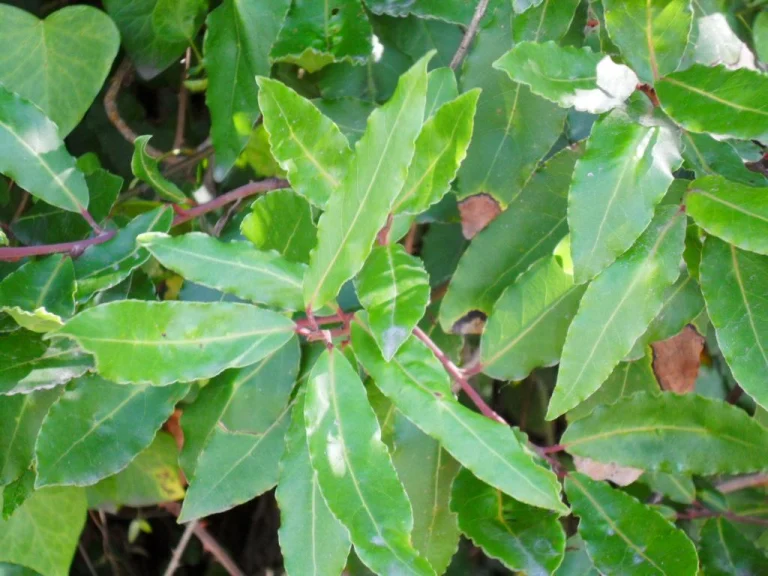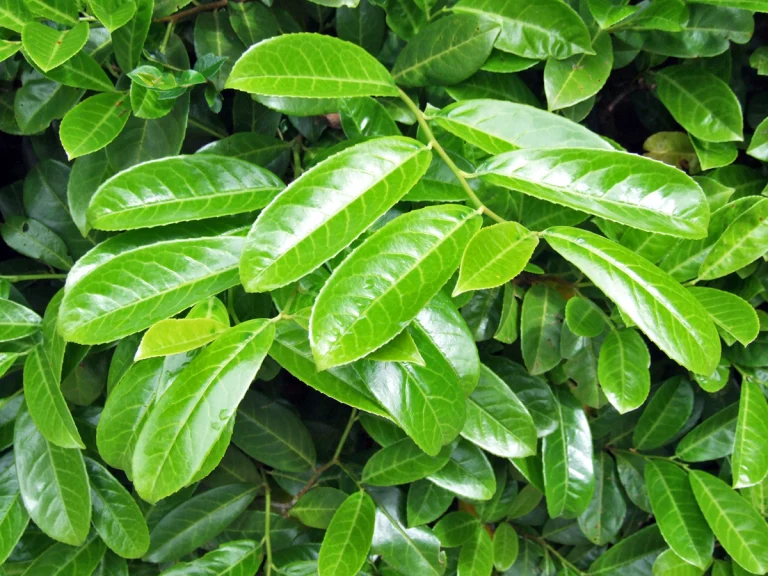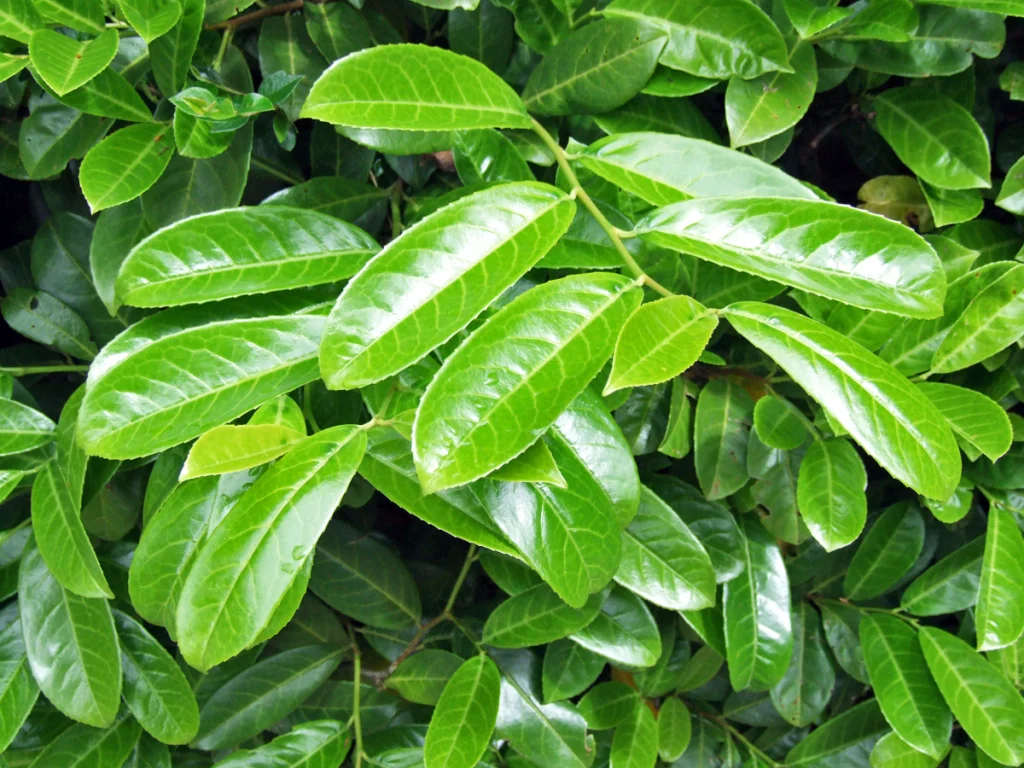
If your cherry laurel leaves look as though someone has fired a shotgun at them, you’ve found shothole. Small, round holes, a few millimetres across, appear all over the leaves, often with a brownish ring around the edge. People ask us about it more than almost anything else, and it nearly always looks a lot worse than it is.
What shothole is
Shothole is a symptom rather than a single disease. It starts as small pale or yellow spots on the leaves. These go brown, and the plant cuts the dead patch off from the healthy tissue around it. The dead patch dries and drops out, which leaves the neat round hole. You’ll often find leaves at every stage on the same hedge: spots, brown patches and holes.
On laurel it’s caused by bacteria and by several leaf-spot fungi. Bacterial shothole is the more common one on cherry laurel in Britain. Both spread in rain splash, so the problem is always worst after a wet spring, and on young leaves, which are softer.
Why some hedges get it badly
Shothole needs wet leaves and a way in. Hedges that suffer most tend to have one or more of these going on:
- They’re watered with a sprinkler, so the leaves stay wet for hours.
- They’re planted very close together, or against a wall, so air can’t move through them.
- They’re trimmed in wet weather, or with a hedge trimmer that’s just been used on an infected hedge. Every cut leaf is a fresh wound.
- They’re stressed by drought, waterlogging or hunger, so they grow slowly and can’t outpace the damage.
How to keep it in check
There’s nothing you can spray that will reliably cure shothole on a garden hedge. What works is making life harder for the infection and helping the hedge grow away from it.
- Rake up fallen leaves from under the hedge and bin them rather than composting them, since they carry the infection into next year.
- On a small hedge, cut out the worst-hit shoots with clean secateurs on a dry day.
- Water the soil, not the leaves. A soaker hose along the base is ideal.
- Only trim in dry weather, and wipe the blades with disinfectant before you start and between hedges.
- Feed in spring with a general fertiliser and mulch along the base. A hedge that’s growing strongly replaces damaged leaves quickly.
An established hedge that’s fed and watered properly will usually grow through a bad year without lasting harm. New growth comes through clean once the weather dries up, and the holed leaves are gradually shed as part of normal leaf drop.
When to worry
Be more concerned if the spots spread onto the stems, if shoots die back from the tips, or if you see sunken, oozing patches on the bark. Bacterial canker can follow the same route into the plant, and branches with cankers should be cut back to healthy wood in dry summer weather. If a whole young plant is dying, it’s often down to a root problem that has weakened it first, so check the drainage too.
If you’re buying new plants, look closely at the leaves before you accept them. Shothole often arrives on nursery stock, and it’s much easier to turn away a spotty plant than to deal with it once it’s in the ground.
Other things that make holes
Not every hole is shothole. The shape of the damage gives the game away.
Notches around the edge: vine weevil
Neat U-shaped bites taken out of the leaf edges are the work of adult vine weevils, which feed at night. On a hedge in the ground, this is cosmetic and you can ignore it. In pots it matters more, because the white, C-shaped larvae eat the roots of potted laurel and bay. Treat pots with a nematode drench in late summer, when the compost is still warm.
Ragged holes low down: slugs and snails
Young plants and low shoots in damp spots get chewed by slugs and snails. Look for slime trails and irregular holes, often near the leaf edge. The hedge will grow out of reach.
Pale wiggly lines: leaf miners
Thin, pale trails that wander across the leaf are made by tiny moth larvae tunnelling inside it. They don’t make holes, they don’t harm the hedge, and there’s nothing worth doing about them.
Torn and split leaves: the trimmer
A blunt hedge trimmer tears laurel leaves rather than cutting them. The torn edges brown off and can look a lot like disease. Our guide to laurel going brown after trimming covers this.
Is shothole a reason to choose another hedge?
Not usually. Most cherry laurel hedges get a bit of shothole in wet years and carry on regardless. If you’re planting on a damp, sheltered site, give the plants a little more room than usual so air can move between them, and plan to do your trimming in dry spells. It’s also worth knowing that bigger leaves show the holes more, so the damage is more noticeable on cherry laurel than on the smaller-leaved Portuguese laurel.
For the rest of the year’s jobs, see our laurel hedge care guide and the laurel calendar.