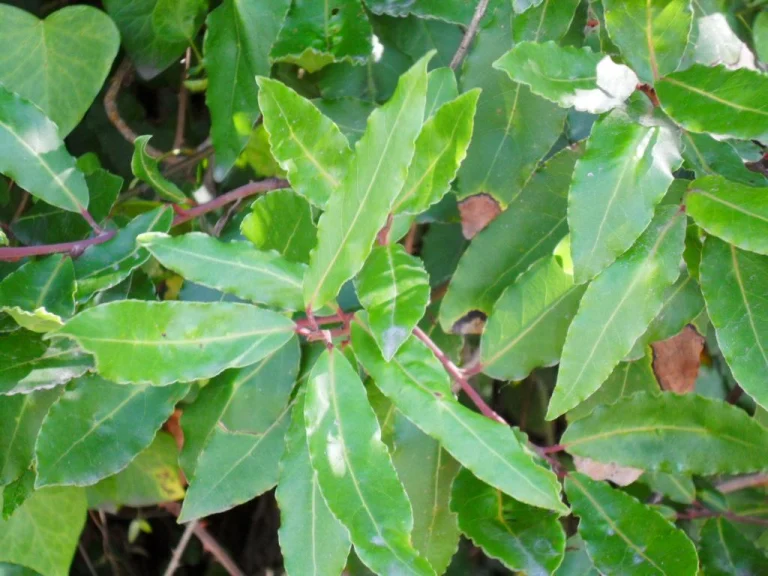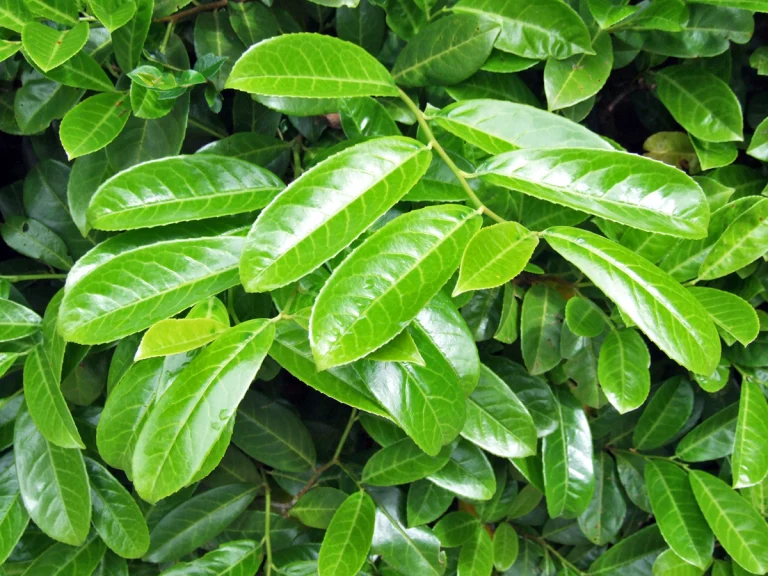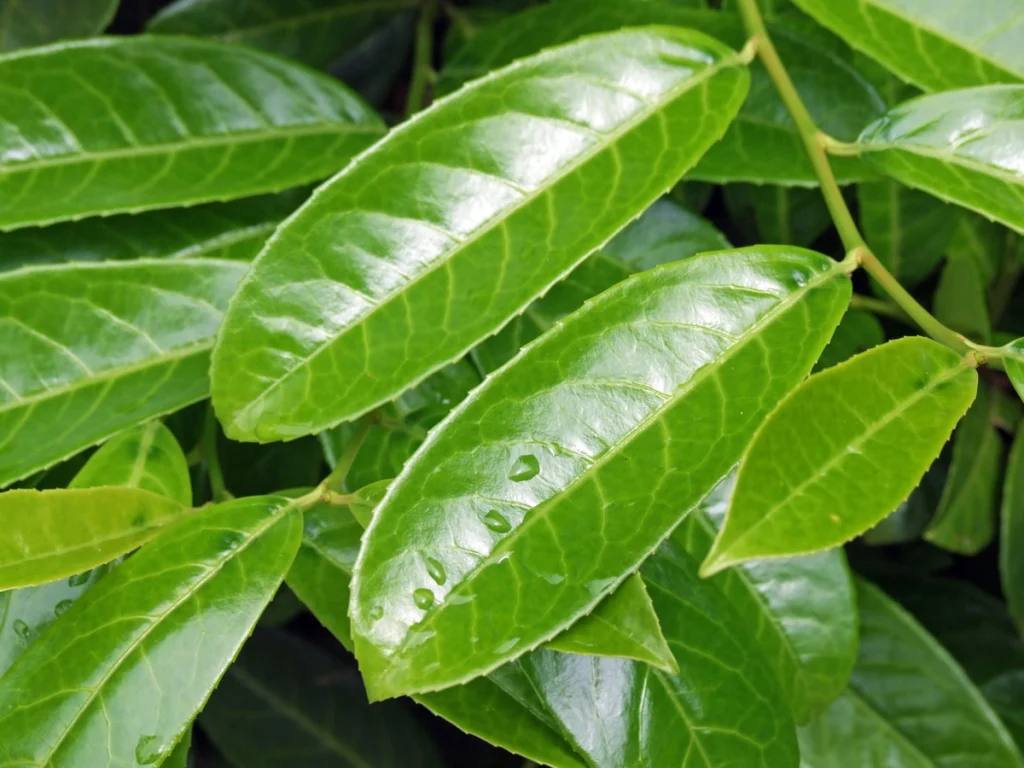
Privet is the hedge in front of half the semis in Britain. It’s cheap, quick and tidy, which is exactly why it was planted by the mile in the 1930s. Laurel is the other common choice for a fast green boundary. They grow at a similar pace, but they make very different hedges.
If you only read one bit
For a low, neat front garden hedge in a tight space, privet is still a great choice. For a tall privacy screen that stays fully green all winter, laurel is the better plant.
| Cherry laurel | Privet (Ligustrum ovalifolium) | |
|---|---|---|
| Winter cover | Fully evergreen | Semi-evergreen, can drop many leaves in a cold winter |
| Leaves | Large and glossy | Small and neat |
| Growth | Fast | Fast |
| Width | A metre or more when tall | Can be kept quite narrow |
| Trimming | Once or twice a year | Two or three times a year |
| Best height | 1.5 to 4m | 1 to 2m |
| Cost | Low | Very low |
Winter cover
Most people get caught out here. Garden privet is semi-evergreen. In a mild winter it keeps most of its leaves, but in a hard one it can lose a lot of them, and a privet hedge in February can be much thinner than it was in October. Golden privet does the same. If the hedge is there to hide something all year, that’s a real drawback.
Laurel is fully evergreen. It’s as thick in January as it is in July, which is a big reason it’s so popular as a screen.
Looks
Privet’s small leaves clip into a very neat, flat surface with sharp edges. It looks smart and traditional, and golden privet adds a bit of colour. In early summer it has creamy white flowers. Some people like the smell, many don’t, and if you trim regularly you’ll cut most of them off anyway.
Cherry laurel looks bolder and glossier, with a softer outline. It’s at its best on bigger boundaries. If you want something between the two, Portuguese laurel has smaller leaves than cherry laurel and clips much more neatly.
Space
Privet can be kept narrow, which is why it suits front gardens and the edges of paths. Laurel needs more room. A tall laurel hedge wants a metre or more of width, and it’s always trying to grow outwards. If the hedge runs along a narrow strip next to a drive, privet is the easier fit.
Trimming
Privet grows fast and needs regular attention to look its best: two or three trims between May and August, more if you want really crisp lines. Leave it and it goes shaggy quickly. Laurel needs one or two trims a year, but each one is a bigger job because of the larger leaves and woodier growth. On cherry laurel, a powered trimmer slices leaves, which then brown at the edges for a few weeks. Privet doesn’t have that problem.
Soil and position
Privet is very tolerant. It grows in poor soil, in sun or shade, and copes with town pollution. Its roots are greedy, though, and the soil next to a privet hedge is often dry and hungry, which makes borders right next to it hard work. Laurel is also tolerant of most soils and shade but doesn’t like waterlogging, and cherry laurel can struggle on very thin chalk.
Privacy and noise
Both make a dense hedge in summer. Laurel’s big leaves and year-round cover make it better for privacy and for cutting down traffic noise, especially once it’s over head height. Privet is usually kept lower, at 1 to 2 metres, which is great for marking a boundary but not for screening.
Cost
Both are cheap. Bare-root privet in winter is about as cheap as hedging gets, and bare-root cherry laurel isn’t far behind. For a long hedge, either is far less than the cost of a fence. Our hedge calculator will work out how many laurel plants you’d need.
Wildlife and safety
Both provide nesting cover for birds, and both have berries that birds eat. Privet berries and laurel leaves and seeds are poisonous to people and animals if eaten, so keep clippings away from livestock and teach children not to eat berries from either.
So which one?
Privet still makes a lovely, crisp front hedge, and if you enjoy trimming and want something narrow and low, it’s a good choice. If the job is to give you privacy all year round, laurel does it better and with less trimming. For a neat, formal laurel hedge, look at Portuguese laurel. For the fastest, cheapest screen, it’s cherry laurel.