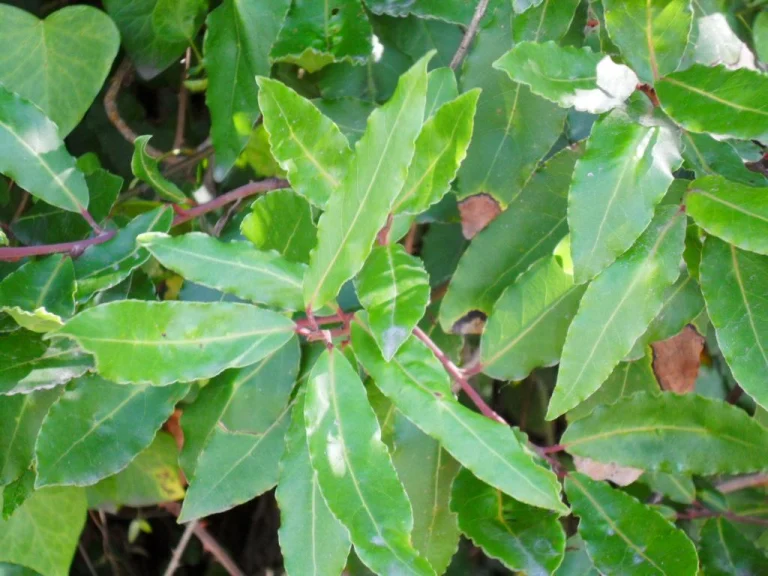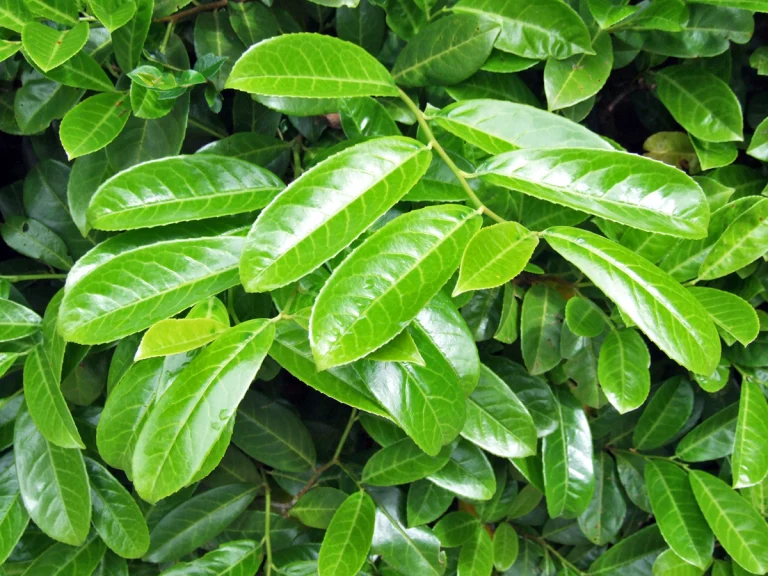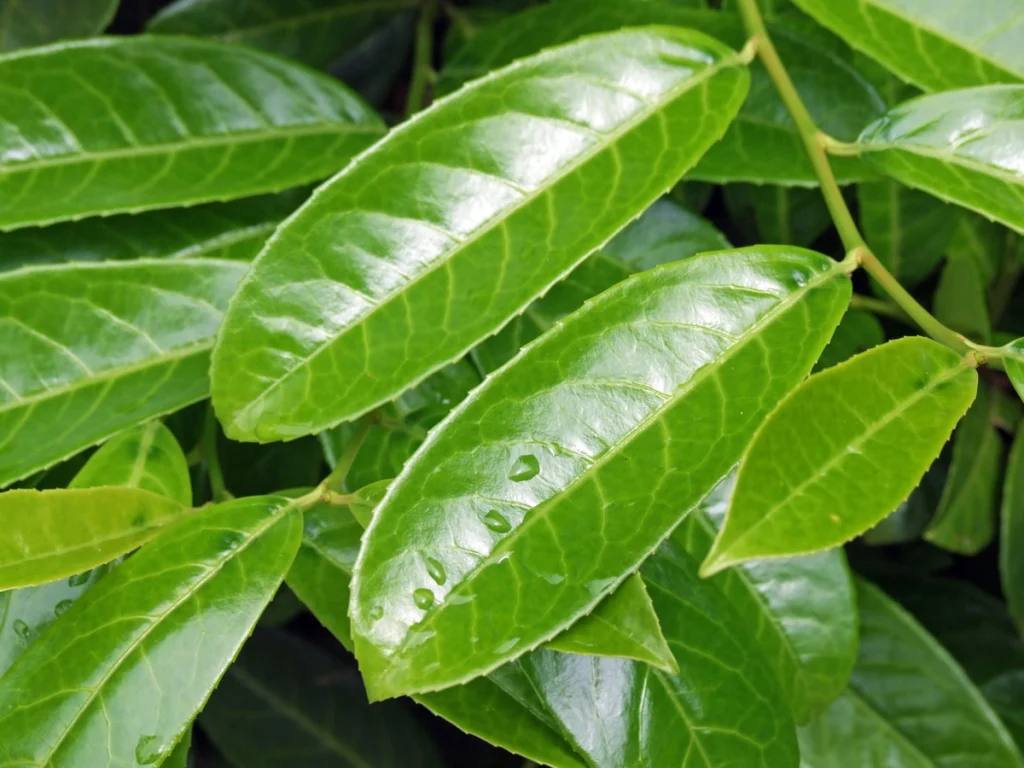
Photinia ‘Red Robin’ has become one of the most popular hedging plants in Britain, mostly because of its bright red new leaves. If you’re planting a new hedge, it often ends up on the shortlist next to laurel. They’re both evergreen and both make a good screen, but they suit quite different gardens.
The quick version
Choose laurel if you want privacy quickly and cheaply, if the hedge is long or tall, or if part of it is in shade. Choose photinia if you want colour, the hedge is in sun, and you’re happy to trim more often to keep the red coming.
| Cherry laurel | Photinia ‘Red Robin’ | |
|---|---|---|
| Look | Big, glossy, mid-green leaves | Smaller leaves, bright red when new, turning green |
| Growth | Fast | Moderate |
| Shade | Copes well with part and fairly deep shade | Needs sun for good colour |
| Privacy | Very dense | Good, a little more open |
| Trimming | Once or twice a year | Two or three times for the best colour |
| Typical hedge height | 1.5 to 4m and above | 1.5 to 3m |
| Cost per plant | Usually lower | Usually higher at the same size |
Looks
Colour is photinia’s whole selling point. In spring the new shoots come through a strong, glossy red, and every time you trim it you get another flush. Against a plain fence or a grey wall it can look terrific. As the leaves age they turn a dark green, so by midsummer a photinia hedge is mostly green with red tips.
Laurel is green all year. Cherry laurel’s big, shiny leaves look lush and catch the light, but some people find them a bit heavy in a small garden. Portuguese laurel has smaller, darker leaves on red stems, and is a good middle ground if you like the red but want a tougher plant.
Speed and privacy
Cherry laurel is one of the fastest evergreen hedges you can plant in the UK, putting on 20 to 60cm a year once established. Photinia is slower. If you’re planting to block a view or a neighbour’s window, laurel gets you there sooner, and because its leaves are so big and dense it’s also the better choice for cutting down road noise.
You can try different sizes and spacings in our hedge calculator to see how long each option would take to reach the height you need.
Sun and shade
Photinia needs sun to colour up well. In shade it grows more slowly, stays greener and gets thin. Laurel is far more tolerant, and is one of the few hedges that copes with growing under or near trees. If your boundary runs from a sunny corner into shade, laurel will look much more even along its length.
Soil and hardiness
Neither plant likes sitting in wet ground, so both need reasonable drainage. Both are hardy in most of the UK, but photinia can suffer in cold, exposed inland gardens in a hard winter. A sheltered spot suits it best. Cherry laurel is tougher, and Portuguese laurel tougher again.
Trimming
Laurel needs one or two trims a year to stay neat. Photinia can get by with one, but to keep the red coming you’ll want to trim it two or three times between late spring and late summer, as each cut triggers new red growth. Photinia’s smaller leaves do look neater after a hedge trimmer, where cherry laurel ends up with sliced leaves that go brown at the edges for a few weeks.
Problems
Photinia’s weak spot is leaf spot. It causes red-purple spots and heavy leaf drop, and in a bad year it can leave a hedge looking very thin. It’s worse in wet weather, in shade and on stressed plants. Laurel has its own troubles, mainly shothole, but a cherry laurel hedge usually grows through it without much fuss.
Cost
At the same size, photinia plants usually cost more than cherry laurel, and because it grows more slowly you may be tempted to buy bigger plants to start with. For a long hedge, the difference adds up quickly. Cherry laurel is often available bare-root in winter, which is the cheapest way to buy any hedge.
Can you mix them?
Yes, and it can work well. Some people plant a laurel hedge for the screen and add a few photinia standards in front of it for colour. Others mix the two along the row, though you’ll need to trim them at different rates to keep the hedge level, and the laurel will tend to outgrow the photinia. If you want a single mixed hedge, Portuguese laurel is a closer match for photinia’s growth rate than cherry laurel.
Which would we plant?
For most people who just want a solid green boundary, laurel is the more practical choice. It grows faster, costs less and puts up with shade and poor soil. Photinia is lovely in the right place, and if you have a sunny, sheltered garden and enjoy that spring colour, it’s well worth considering. Just go in knowing it needs more trimming and has a known disease problem.
When you’re ready, see our laurel picks and the planting guide.